Personal color Sub-season
Dark Autumn Personal Color Analysis
What the Dark Autumn season is
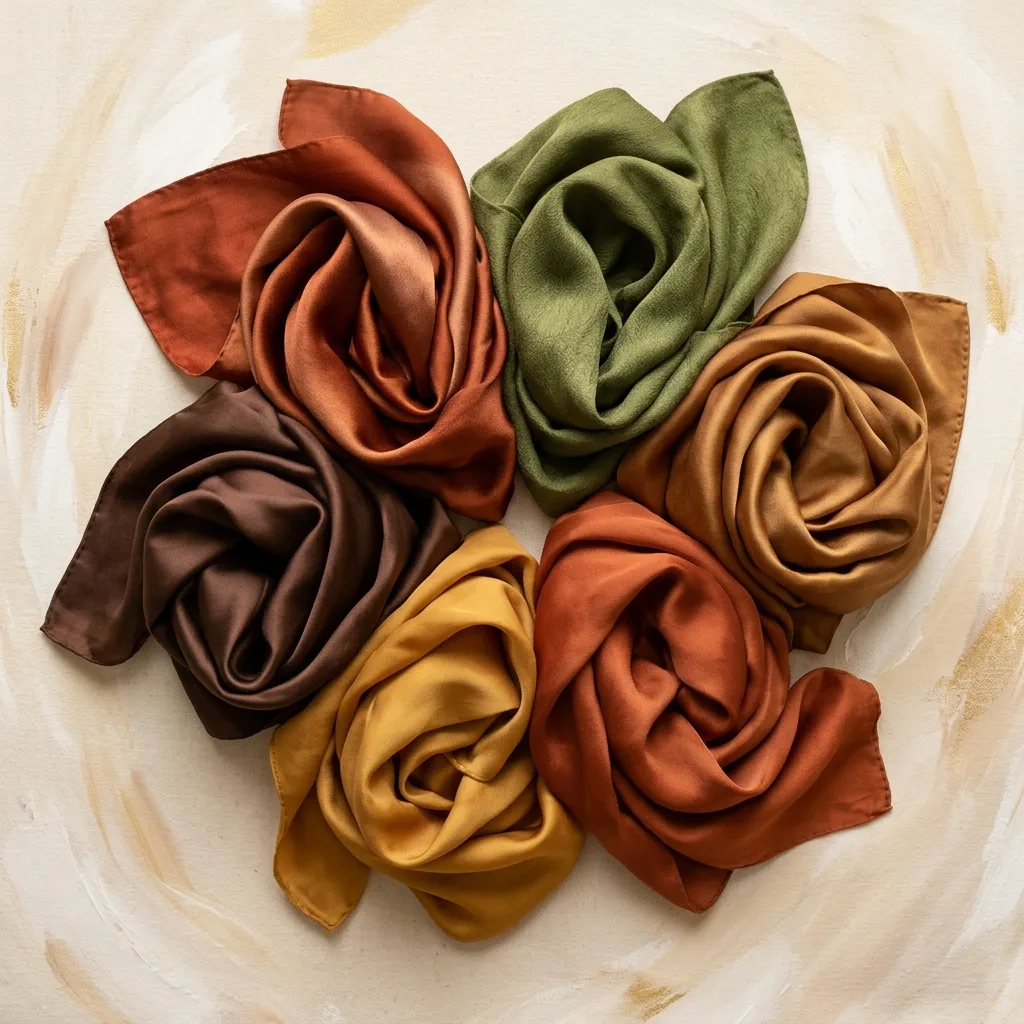
Dark Autumn is the deepest, most intense variation of Autumn, on the border with Winter. It keeps the earthy warmth, but in rich, dark tones with higher contrast.
It's the sub-season for those with a deep, warm appearance, flattered by full-bodied, dark colors like chocolate, brown and intense moss green.
Dark Autumn, also known as Deep Autumn, is the sub-season where depth takes charge. The temperature stays warm but moves closer to neutral, the saturation is rich, and the contrast between skin, eyes and hair is the highest in the Autumn family. Think of a forest at dusk: forest green, coffee, mahogany, burgundy, dark mustard, deep teal and aubergine, with flashes of gold.
Because it bridges Autumn and Dark Winter, this sub-season can handle more intense, darker colors than the rest of the family, including jewel tones like pine green, deep ocean blue and crimson. What keeps it in Autumn is the warm base: even the darkest shades in the palette carry a hint of brown, olive or gold, never icy blue.
For a Dark Autumn, light colors and pastels are the biggest risk: they look washed out and leave the face without structure. Deep colors that would overwhelm other people do the opposite here. They frame the face, define the features and add instant sophistication.
How to know if Dark Autumn is your season
- Your natural hair is dark brown, espresso, or black with a warm glint in the sun.
- Your eyes are dark brown, chocolate, deep amber or dark olive green.
- There's visible contrast between your hair and skin, but without Winter's coolness.
- Dark shades like coffee, forest green and burgundy make your face brighter, not heavier.
- Pastels and very light tones, like baby pink and baby blue, seem to erase your face.
- Antique gold and bronze flatter you more than shiny silver.
- A reddish-brown or warm wine lipstick looks natural, almost like your own lip color.
Who it's for
Skin
Medium to dark, warm undertone.
Eyes
Dark brown or deep amber.
Hair
Dark brown or black with warm highlights.
Dark Autumn color palette
Core colors
Neutrals for your wardrobe base
How to wear Dark Autumn colors
Dark Autumn neutrals are deep and warm: coffee brown, chocolate, dark olive, a very dark green-based navy and a softened near-black, plus warm beige, ivory and off-white for breathing room. They're the perfect base for tailoring, long coats and dark denim. A coffee coat over dark olive trousers with an ivory knit is the kind of look that says polished without trying.
Your accent colors are nature at its richest: terracotta, dark mustard, forest green, burgundy, mahogany, deep teal and aubergine. High-impact pairings include forest green with mustard, burgundy with coffee, teal with copper and aubergine with antique gold. Because your natural contrast is higher, you can also carry light-and-dark combinations like ivory with chocolate. For prints, choose medium to high contrast: deep paisley, dark florals, coffee-toned animal print and green and burgundy tartan.
At work, one statement piece over a neutral base is all you need: a terracotta silk blouse, a long olive cardigan, a mahogany blazer. For evening, forest green velvet, burgundy satin, coffee leather and brocade with gold thread create a luxurious look. This is the Autumn sub-season that does nighttime best, because dark colors are its home turf.
Dark Autumn makeup
Dark Autumn makeup can go more intense than the other Autumn sub-seasons. Foundation should have a golden or warm olive base, and contour can be done in coffee or deep bronze tones. On the lips, terracotta, brick red, reddish brown and warm wine are sure bets; for evening, a deep wine or a dark brownish red finishes the look with impact.
On the eyes, the smoky eye is your secret weapon: coffee brown, bronze, dark copper and army green, with a touch of antique gold in the center of the lid. Liner can be a strong dark brown or even a soft black, because your contrast can carry it. For blush, terracotta, burnt peach and bronze warm and sculpt the cheekbones. Very light shades like baby pink or pastel peach turn chalky on this skin.
Lipstick shades
Blush shades
Eyeshadow shades
Best hair colors for Dark Autumn
Dark Autumn hair should be rich, deep and warm. Chocolate, golden dark brown, coffee, mahogany and dark honey or cinnamon reflections create a luxurious frame for the face. To add light without losing depth, go for dark caramel or burnt copper balayage that starts below the root and concentrates on the ends.
If your hair is naturally black, you can keep it; what matters is some warmth in the reflection. What to avoid is dyed blue-black, light blondes, platinum and any ash toner. Very light blondes create an artificial contrast with dark brows and eyes and leave the skin looking lifeless.
Hair shades that harmonize
Dark Autumn accessories and metals
Dark Autumn metals are rich and warm: antique gold, bronze, copper and a deeper rose gold. Larger, textured pieces (chunky links, hammered or engraved finishes) match the intensity of this sub-season. Deep stones like garnet, dark amber, tiger's eye, red jasper, dark jade and imperial topaz are great choices. Very shiny silver can look cold. For glasses, dark tortoiseshell, coffee, bottle green and burgundy are the best frames.
Metal and accessory tones
Colors that flatter
The deepest, warmest Autumn colors: chocolate, brown, dark moss green, rust and intense mustard.
Colors to avoid
Cool, washed-out pastels like baby pink, lilac, light gray and pure white, which make you look lifeless.
Why these colors don't flatter Dark Autumn coloring
The colors to avoid as a Dark Autumn are cool and light: cool pastel pink, icy baby blue, pastel peach, ice white, pale lavender and cool mint green. They lack depth and have a bluish base, so next to deep, warm skin they look artificial, like a layer of chalk on the face. The gap between those airy colors and your strong features also throws the look off balance. If you want to wear lilac, for example, choose a skirt or shoes and keep a rich neutral up top.
Dark Autumn or Dark Winter?
Dark Autumn and Dark Winter share the same depth and similar contrast, which is why they're so often confused. Both look great in dark, full-bodied colors, and both can wear wine, dark green and deep blue. The difference is temperature: Dark Winter is cool and calls for pure black, optic white, cherry red, purple and silver, while Dark Autumn is warm and calls for coffee, mahogany, olive, dark mustard, brick red and antique gold.
The most reliable test is to compare pairs near your face: black versus coffee brown, optic white versus ivory, cherry red versus brick red, purple versus aubergine, silver versus bronze. If the cool shades make your skin look clean and the warm ones turn it yellow, you lean Dark Winter. If the warm shades light you up and the cool ones look harsh and gray, you're a Dark Autumn. Jewel tones show the difference too: Winter's are bright and icy, like sapphire and amethyst, while Autumn's are earthy, like pine green, teal and aubergine.
Read the full Dark Winter guideDark Autumn: frequently asked questions
Can Dark Autumn wear black?
Yes, in moderation. It's the only Autumn sub-season that can handle shades very close to black, and the palette even includes a softened near-black among the neutrals. Still, coffee brown, chocolate and dark forest green usually flatter more. When you do wear black, add gold jewelry and a warm lipstick to keep warmth near your face.
What is the best hair color for Dark Autumn?
Chocolate, espresso, golden dark brown and mahogany are the safest choices. Dark honey, cinnamon or burnt copper reflections add light without losing depth. Avoid light blondes, platinum, ash tones and blue-black.
Can Dark Autumn wear white?
Optic white usually looks harsh. Choose ivory, off-white and light warm beige instead. Paired with dark browns and greens, these light shades create the high-contrast look that suits this sub-season.
How do I know if I'm a Dark Autumn or a Dark Winter?
Hold black against coffee brown and silver against antique gold near your face. If coffee and gold make your skin look more alive while black and silver look harsh, you're a Dark Autumn. If it's the other way around, you lean Dark Winter. The TikTests AI analysis runs this temperature comparison from a single selfie.
Can Dark Autumn wear bright colors?
Yes, as long as they're bright and deep at the same time. Golden mustard, crimson, pine green and ocean blue all work well. Light, vivid colors like neon and pastels work against Dark Autumn far more than dark ones do.
Keep reading
June 16, 2026
Personal color analysis types: Winter, Autumn, Spring or Summer, which are you?
Learn the 4 color seasons of personal color analysis, what defines each palette, how undertone and contrast work, and discover yours with a free AI color test.
Read more
June 18, 2026
Best hair color: what really suits your personal color season
Find the best hair color for your personal color season. A season-by-season guide to blondes, browns, reds, highlights and balayage that flatter your undertone.
Read more
June 16, 2026
Makeup and personal color analysis: how to choose the shades that flatter you most
Learn how to use your color season to pick lipstick, eyeshadow, blush and foundation more accurately. A complete guide for Spring, Summer, Autumn and Winter.
Read moreCould you be a Dark Autumn?
Discover your personal color season in under 2 minutes with our AI analyzer. Free and no sign-up.