TikTests News
Best hair color: what really suits your personal color season
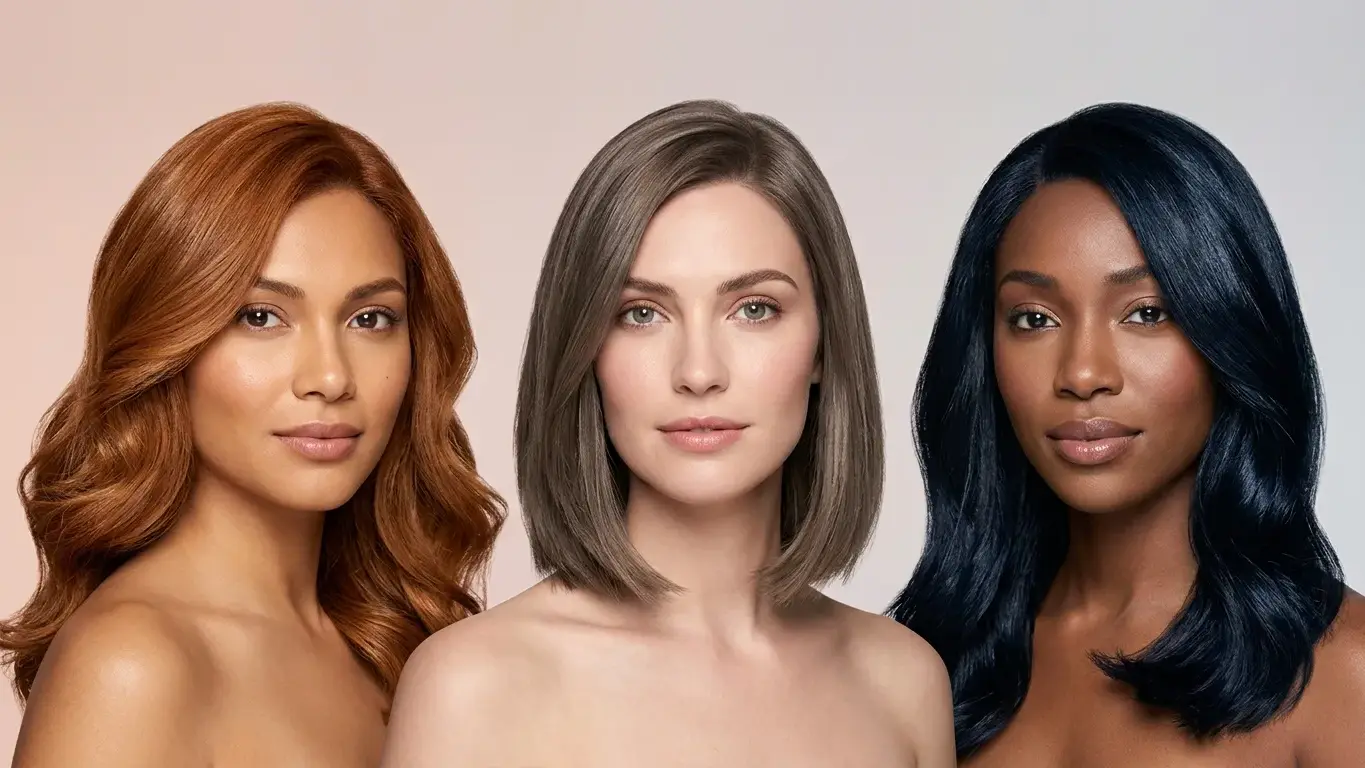
Have you ever left the salon with a hair color that looked perfect on paper, like that influencer's platinum blonde or the copper from your inspiration photo, and still felt off, more tired, with dull skin? Most of the time the problem isn't the hair. The shade you chose clashes with your skin undertone instead of working with it. That's where personal color analysis comes in. When your hair color matches your season, it brightens your face, softens dark circles and makes your skin look healthier, with no extra effort. This guide shows you exactly which hair color flatters you.
Why hair color works with (or against) your skin
Hair frames your face. Unlike a top you can change, it sits against your skin all day, reflecting light and color straight onto it. That's why a hair color with the wrong temperature is so unforgiving: it changes how your skin looks.
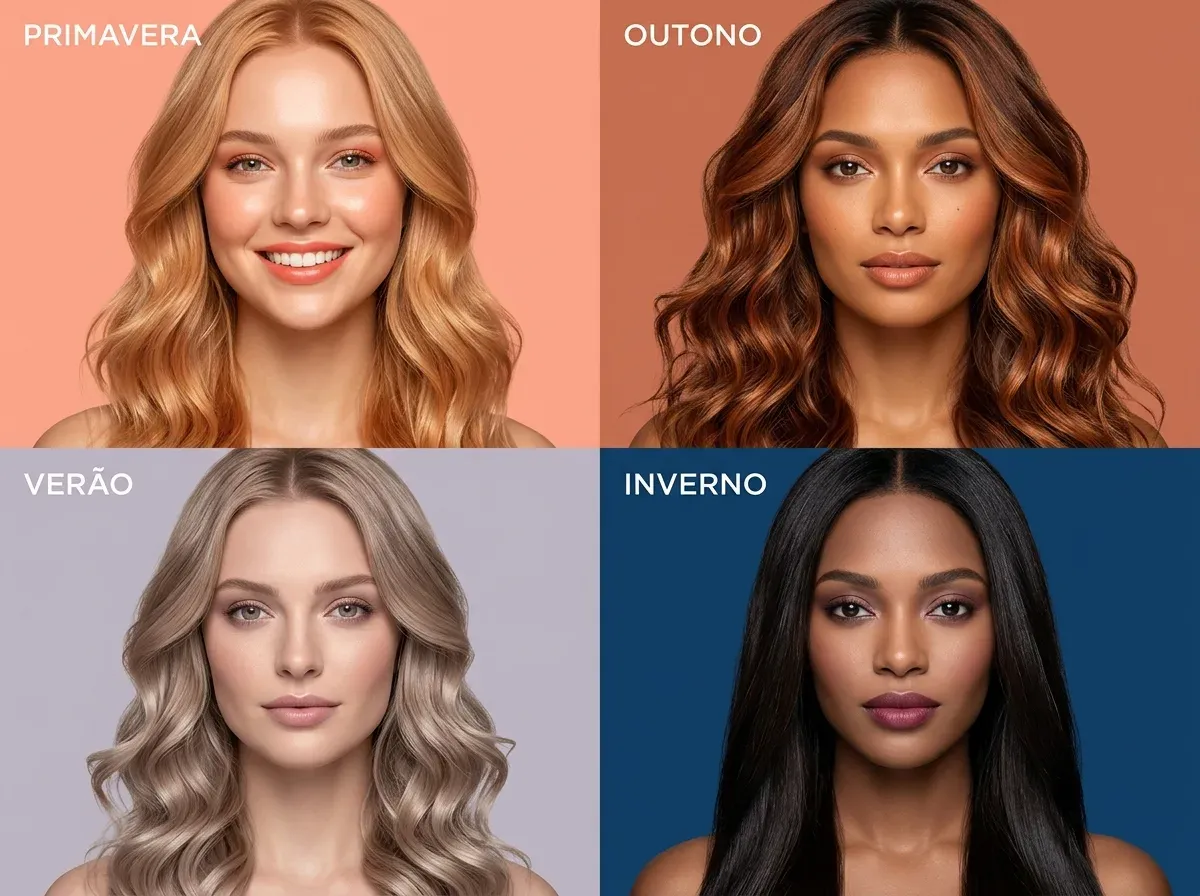
Personal color analysis sorts everyone into one of four seasons (Spring, Autumn, Summer and Winter) based on three variables: temperature (warm or cool), depth (light or deep) and contrast (high or low). The best hair color respects all three at once. Getting the temperature right solves half the problem; adjusting depth and contrast solves the rest.
Warm hair vs. cool hair: the split that decides everything
Before you think blonde, brunette or red, think temperature. Every hair color has a warm or cool base:
- Warm tones (for Spring and Autumn): golden, honey, caramel, copper, warm chocolate, red, auburn. They have yellow, orange or red reflections.
- Cool tones (for Summer and Winter): ash, platinum, pearl blonde, smoky brown, blue-black. They have gray, cool beige or blue reflections, with no yellow.
People with a warm undertone who dye their hair a very cool shade (like ash platinum) often end up with gray, drained-looking skin. People with a cool undertone who go for golden caramel tend to look too yellow or flushed. The rule is simple: choose hair that matches the temperature of your skin.
The best hair color for each season
Spring: golden, luminous blondes and browns
Spring is warm, light and bright. The best hair is golden and luminous, never heavy.
- Blondes: honey blonde, golden blonde, butter blonde, strawberry blonde.
- Browns: light golden brown, honey brown, warm hazelnut.
- Reds: light copper, golden ginger.
- Avoid: jet black, very dark brown and any ashy tone. They flatten the lightness and glow of Spring skin.
Autumn: caramel, copper and warm chocolate
Autumn is also warm, but the palette is deeper and earthier. This is the season that shines most in rich reds and warm browns.
- Blondes: caramel blonde, dark honey blonde, golden bronze (cool blondes don't work).
- Browns: warm chocolate, copper brown, hazelnut, cinnamon brown.
- Reds: deep copper, rust, warm burgundy red. This is Autumn's high point.
- Avoid: platinum blonde, ash, smoky brown and blue-black, which wash out the golden richness of the skin.
Summer: cool blondes and soft ash browns
Summer is cool, light and soft. The best color is cool, but never harsh or high-contrast.
- Blondes: ash blonde, pearl blonde, ash-beige blonde, cool beige.
- Browns: cool medium brown, mushroom brown, taupe.
- Reds and reddish tones: only soft, cool shades like mauve or ashy rosé.
- Avoid: gold, honey, caramel, copper and intense black. Warm tones turn the skin yellow, and black creates too harsh a contrast for Summer's delicacy.
Winter: intense cool darks and pure platinums
Winter is cool, deep and high-contrast. It can carry the most dramatic colors, as long as they're cool.
- Darks: blue-black, espresso brown, very dark cool brown.
- Blondes: only pure, cool platinum (ice blonde), never golden.
- Reds: cool cherry red, bluish burgundy, plum.
- Avoid: caramel, honey, gold, copper and warm browns. They dull the sharp contrast that defines Winter and leave the skin lifeless.
Highlights and balayage: how to choose for your season
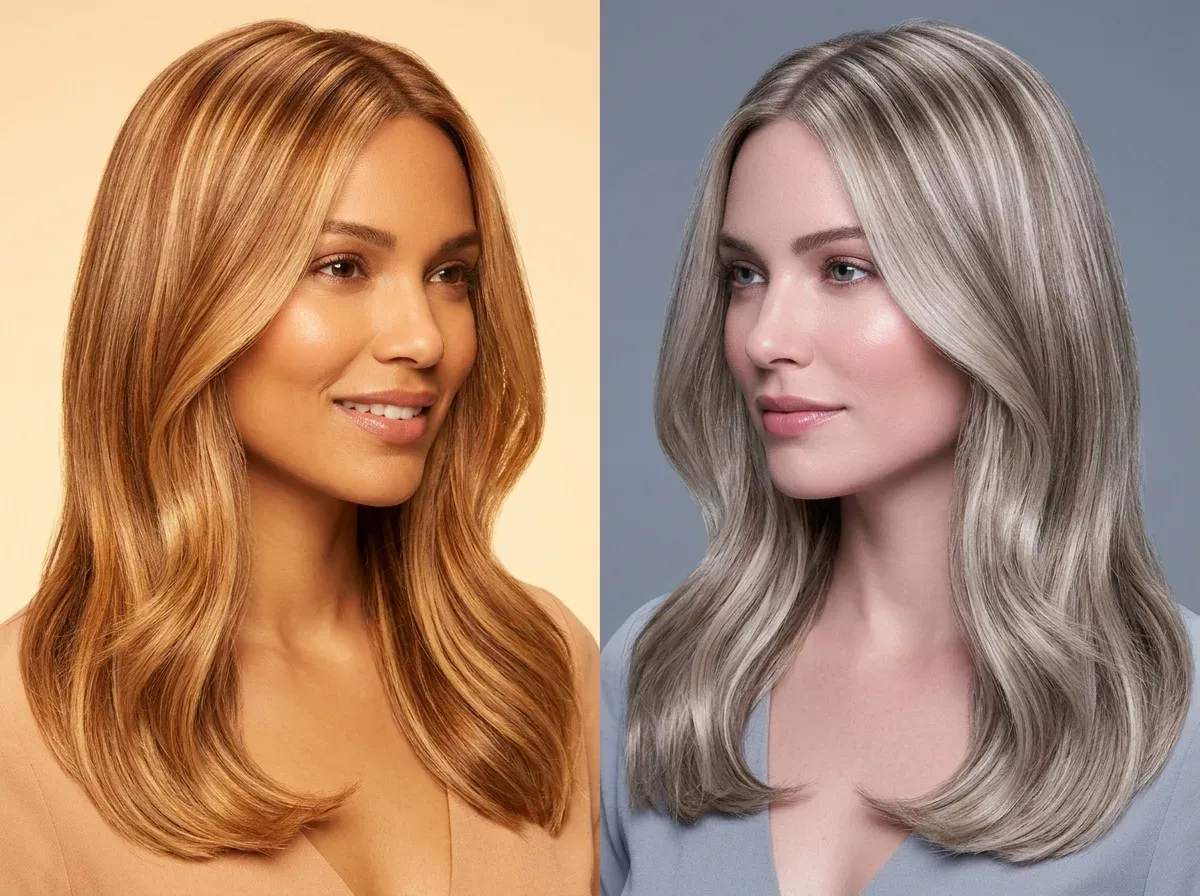
Highlights and balayage follow the same rule as your base color: the temperature of the lightened pieces has to match your undertone. The classic mistake is getting golden highlights when you're cool (or ashy highlights when you're warm) and ending up with an artificial look.
- Spring: honey and light golden balayage that brightens the face softly.
- Autumn: caramel, copper and red highlights over a brown base for a rich, warm effect.
- Summer: soft, cool ash-beige highlights, with no harsh contrast against the base.
- Winter: high-contrast cool highlights, such as platinum over dark hair, or none at all (Winter often looks stunning in a solid, intense color).
Another tip: low-contrast seasons (Spring and Summer) look better with subtle, well-blended highlights, while high-contrast seasons (Winter and, in part, Autumn) can handle sharper transitions.
The most common mistakes (and how to avoid them)
- Platinum on an Autumn: cool ash blonde against golden skin creates a temperature clash and looks aging. Autumn needs gold and copper.
- Warm caramel on a Winter: caramel yellows cool skin and dissolves its natural contrast. Winter needs cool and intense.
- Jet black on a Spring or Summer: black is too heavy for light palettes and creates a contrast that hardens the face.
- Gold on a Summer: even a beautiful blonde, if it's warm, leaves cool skin looking flushed or yellow.
- Following trends and ignoring temperature: copying an influencer's color only works if you share her season.
Does dyeing my hair change my personal color season?
No. This is one of the most common questions, and the answer is reassuring: your season doesn't change when you dye your hair. Personal color is defined by your skin undertone and eye color, which are fixed. Hair color is the only one of the three variables you can change.
What changes is the overall effect. If you dye your hair a shade with the wrong temperature, you don't change your season, but you fight it every day. If you pick an aligned shade, you boost your natural palette. That's why the best order is to find your season first and choose the color second, not the other way around.
Practical note: if you take the photo-based color test, use your natural hair color or show your roots, because an artificial color can interfere with how the analysis reads your features.
How the free TikTests test reveals your ideal shade
Finding your season is the step that unlocks all of these decisions. You can do it with an image consultant or, quickly and for free, with the TikTests AI analyzer. The test uses a selfie to cross three parameters (temperature, depth and contrast) and gives you your season and palette in a few minutes.
With your result in hand, you walk into the salon knowing exactly which color temperature to ask for: honey or ash, caramel or platinum, warm chocolate or cool espresso. No more guessing, and your next color finally works in your favor.
Frequently asked questions
Which hair color brightens the face the most?
The one with the same temperature as your skin undertone. Warm skin lights up with golds, honeys and coppers; cool skin lights up with ash, cool beige or cool dark tones. The right color always makes your skin look healthier, not duller.
Can I be blonde if I'm a Winter?
Yes, as long as it's a cool blonde: pure platinum or ice blonde. What doesn't work for Winter is golden or honey blonde, because it breaks the cool contrast that flatters this season.
Does gray hair go with every personal color season?
Gray has a cool base, so it naturally flatters Summer and Winter. If you're a Spring or Autumn (warm), you can balance it with a warmer, more golden gray, or soften it with makeup and clothes from the right palette.
Are golden highlights good for cool skin?
Generally not. Golden highlights are warm and tend to make cool skin (Summer and Winter) look yellow. Choose cool ash-beige or platinum highlights instead, depending on the depth of your season.
Do I need to know my season before going to the salon?
Ideally, yes. Knowing your personal color helps you avoid the most expensive salon mistake: choosing a color with the wrong temperature. Once your season is defined, you can tell your stylist exactly which shade flatters you.
Choose your next color with confidence
The right hair color isn't the trendy one. It's the one that works with your skin. Once you know your season, every salon visit stops being a gamble and becomes a safe decision that flatters your face every day. And finding out takes less than two minutes.
Keep reading
June 18, 2026
Skin undertone: warm, cool or neutral, and how to find yours
Learn how to find your skin undertone with simple at-home tests (wrist veins, gold vs. silver, white paper) and how it connects to your personal color season.
Read more
June 16, 2026
Makeup and personal color analysis: how to choose the shades that flatter you most
Learn how to use your color season to pick lipstick, eyeshadow, blush and foundation more accurately. A complete guide for Spring, Summer, Autumn and Winter.
Read more
June 16, 2026
Personal color analysis types: Winter, Autumn, Spring or Summer, which are you?
Learn the 4 color seasons of personal color analysis, what defines each palette, how undertone and contrast work, and discover yours with a free AI color test.
Read more